Syria After Assad
I'm delighted to announce the publication of POMEPS Studies 57 Syria After Assad on the anniversary of the overthrow of Bashar al-Assad one year ago. There have been a number of really good, thoughtful and critical pieces published in conjunction with the anniversary (from our political science community I would highlight the symposium featured in the fall 2025 issue of MENA Politics, convened by Rana Khoury and Sefa Secin which I previously blogged, and the fascinating survey results documenting a combination of hope and fears just released by the Arab Barometer team and reported by Salma al-Shami and Michael Robbins in Foreign Affairs).
POMEPS Studies 57 began with an online workshop convened by me, Andre Bank, and Wendy Pearlman, with the invaluable assistance of Abdul-Wahab Kayali of the Arab Political Science Network in selecting participants and Steven Heydemann in moderating and discussing papers. We did not assign topics, instead inviting a remarkable group of mostly junior scholars, many of them Syrian and most of them with long experience doing research on and in Syria, to themselves identify the most critical and urgent questions facing the transition – a transition which most, if not all, of the authors view as post-Assad but not yet post-war.
As we write in our introduction to the collection:
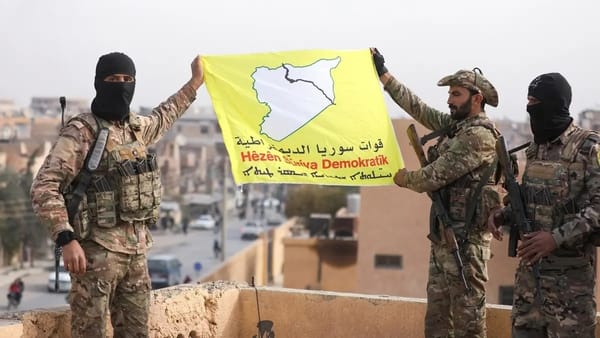
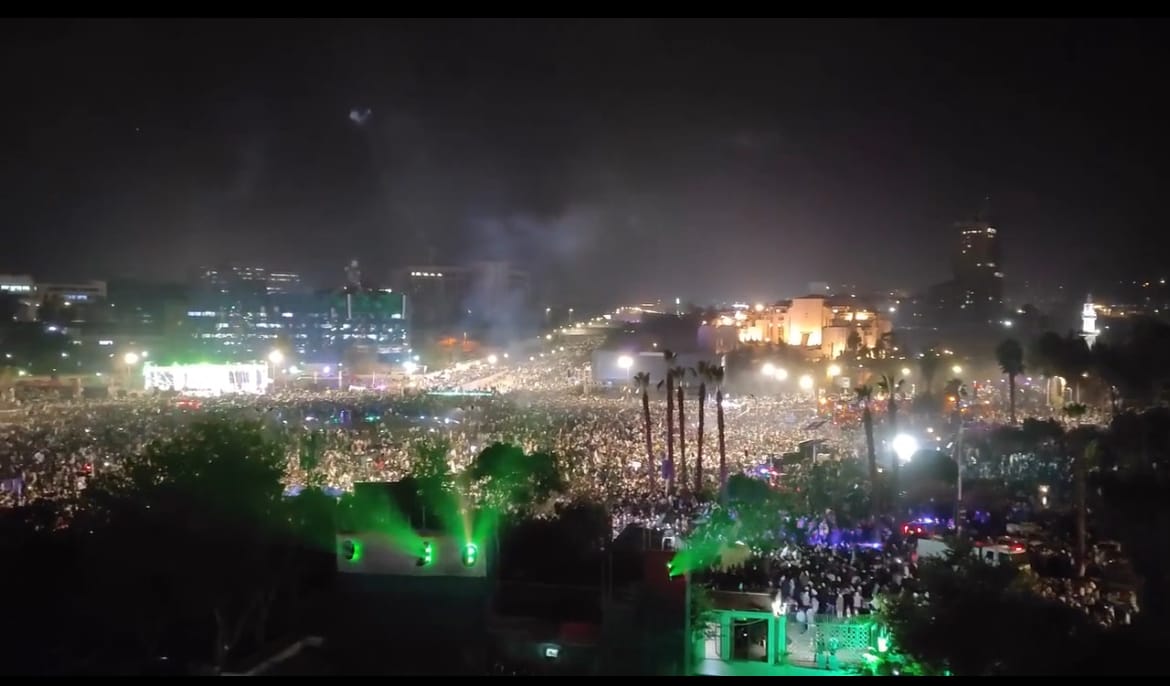
On November 26, 2024, most observers regarded Syria as a “frozen conflict” in which the 54 years of authoritarian rule by the Assad family was poised to continue into the foreseeable future. The next day, the Islamist rebel group Hay’at Tahrir al-Sham (HTS) led a coalition of rebels on a lightning speed military offensive that seized town after town as the government’s military defenses collapsed. On December 8, Bashar al-Assad fled, Syrians near and far went out in celebratory demonstrations, and HTS assumed power in Damascus.
The year since then has been filled with one milestone after another: the caretaker government gave way to a formal transitional government under President Ahmed al-Sharaa. A National Dialogue Conference in late February sparked both praise for bringing hundreds of Syrians together to discuss the most critical issues facing the country, and criticism for being a rushed one-off rather than a sustained reconciliation process. In March, a presidential-appointed committee put form an interim constitution that set forth a state structure for a five-year transition. Indirect parliamentary elections in October selected two-thirds of a new people’s assembly, with another third to be appointed by the president. Nonstop diplomatic work transformed Syria’s foreign relations, including opening a new era of cooperation with the United States culminating in a White House visit in November. And amidst these steps establishing the contours of new political institutions and practices, incidents of violence have ignited new fears about whether the new Syria could become a country protecting the security and rights of all of its citizens. Among the most alarming were sectarian massacres in March and July, which together claimed some 3,500 lives.
These and many other developments during the past year have given rise to a host of crucial questions about the future of Syria and the Syrian people. To explore them, the Project on Middle East Political Science (POMEPS) launched a call for papers and selected more than a dozen emerging scholars to participate in an intensive online workshop in mid-September 2025. Based in eight different countries, many of these researchers are Syrian, and most have years of research experience on Syria or Syrian diasporic communities. The papers resulting from the workshop provide fresh insight into a range of critical issues: decentralization and state consolidation, sectarian violence, refugee return, security sector reform, transitional justice, economic reconstruction, and more. This framing introduction summarizes their key contributions and puts their arguments in conversation with each other, organized around some of the most important questions facing Syria today.
After reviewing the contributions of the more than dozen authors who shared their insights in the collection, Bank, Pearlman and I offer some preliminary conclusions:
One Year On: Post-Assad, not Post-War
This collection suggests that, one year on, politics in post-Assad Syria continues to generate more questions than answers. Still, the expert analyses in this volume point to some preliminary conclusions.
First, the brutal dictatorship of Bashar al-Assad is over and there is no indication that it will be coming back. There is little sign of any viable Assadist insurgency comparable to what emerged in Iraq after the toppling of Saddam in 2003, which some observers feared would pose an immediate challenge to stability and security. One year on, it is fair to say that Syria is indeed “post-Assad,” even if the task of transforming the legacies, mentalities and practices that Assad left behind remain ongoing.
Second, however, it might not yet be fully appropriate to describe Syria as “post-war.” The violence in portions of the country, the limits of the reconsolidation of the new government’s authority, and the military occupation of Syrian territory by Türkiye and Israel suggest that it might be premature to say that “post-Assad” equals “post-war.” Indeed, the authors of this volume take different positions on that question. Furthermore, the degree that “war is over” is felt differently by different Syrians, in part depending on who they are and where they live. For some, violence or the threat thereof very much remains.
Third, the large-scale violence in Suweida in July 2025 can be considered a defining moment in the transitional period, if not the most critical turning point for Syrian politics during the twelve months since Assad’s flight. Many Syrians themselves note it as a turning point in their own feelings about the transition process and thoughts about Syria’s future prospects. That many of the papers in this volume also comment on this event, and several put it at the center of their analysis, is testimony how no understanding of Syria’s domestic politics is complete without reckoning with both its causes and ongoing consequences.
Fourth, Syria’s challenges — and likewise the solutions to them — are fundamentally political. Different authors of this volume, among them Hamdan, Dukhan and Lee, highlight the structural issues that the transitional government faces, including those related to capacity, autonomy, sovereignty, and legitimacy. A common policy advice by a number of the contributors, such as Hyyppä, Tlass and Lee, suggest a relative devolution of powers or forms of decentralization from the national state to the regional and subnational levels, in particular in the fields of security sector reform and local governance.
Fifth, many of the millions of those who fled Syria’s war are not close to an end of their long years of exile. As Khoury and al-Saeid make clear, many refugees — like many who never left — have only begun to process the meaning of Assad’s fall as they balance their hopes and their fears. As many states around the world increasingly block avenues for asylum or temporary protection, and their societies increasingly call for refugees to go home, displaced Syrians face difficult choices about whether to return to their land of origin or continue building their lives in countries near and far.
Sixth, one of the most resounding calls emerging across the 13 papers is for the need for post-Assad Syria to be built on principles of inclusion. Whether in the realms of socio-economic reform writ large (Snider), more specific currency reforms (Krayem), water governance (Asaad), governmental institutions (Lee; Hyyppä; Tlass), transitional justice (Bassisseh et al.; Tammas and Sosnowski), practices toward war-disabled people (Salma Daoudi), or pursuit of truly durable solutions to displacement (Khoury, al-Saied), policies ought not be made and imposed by just one segment of the Syrian people, including the government in Damascus. Rather, if Syria’s transition is to bring about the freedom and dignity for which so many Syrians gave so much, all citizens should see themselves as incorporated in and represented by processes of state decision-making.
The current post-Assad moment is replete with risks and dangers, but it also represents tremendous potential for good for the Syrian people. The papers in this volume point to factors, processes, and players that help us understand the first year after Assad’s fall. They also point to questions that will persist into the next phase, as Syrians — both state and society — continue to forge a new political reality. We hope that the contributions to this collection open up space for continuous and rigorous political science engagement with the Syrian transition while always centering the experience and views of Syrians themselves.
This collection is a tour de force of keenly observed, empirically rich and theoretically informed analysis of a turbulent and uncertain moment in a most-unexpected transition. You can download the whole collection for free here, as well as read all of the individual pieces.
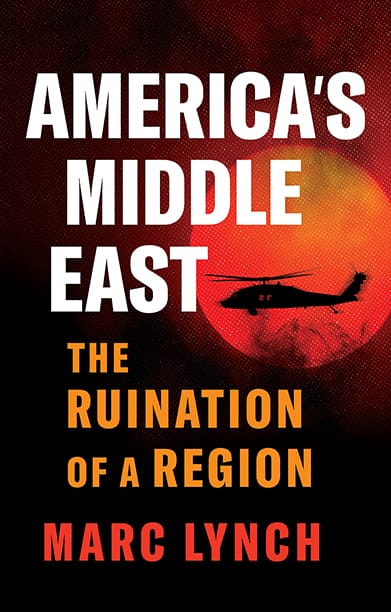
My new book, America's Middle East: The Ruination of a Region, is now available in the United States via Oxford University Press. I'm thrilled by some of the first (excellent) reviews, including this one from Sasha Polakow-Suransky in the Financial Times, this one from Daniel Geary in the Irish Times, about which I'll have more to say soon. For now, please pick up a copy of the book if you're interested – the Kindle version is still 50% off!