This Must Be The Podcast: Mohammed Soliman
We take a break from the grim headlines to spotlight another new episode of the Middle East Political Science Podcast
Last year, I published a Cambridge Element called What is the Middle East: The Theory and Practice of Regions. It build upon a March 2022 Foreign Affairs article which argued that the traditional map of the Middle East no longer accurately captured the transregional dynamics across the Indian Ocean, across the Sahel or across Eurasia. What is the Middle East? dove deep into the historical formation of the Middle East construct from British and French colonialism through the decolonization and the Cold War, and through the creation of the area studies in Amerian higher education which locked into place certain definitions of region for the purposes of the production of knowledge.
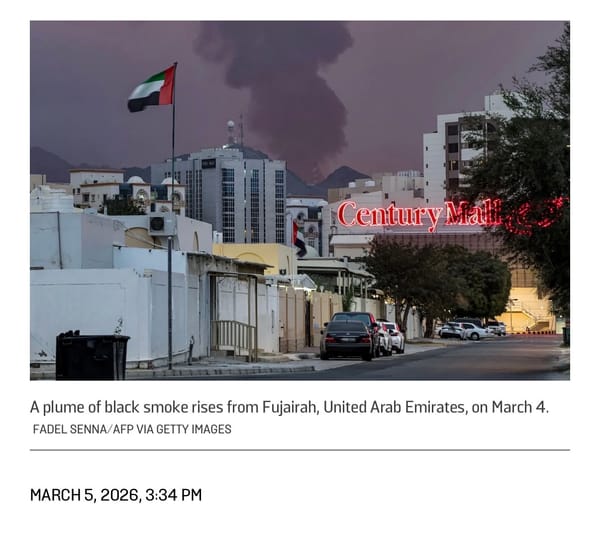
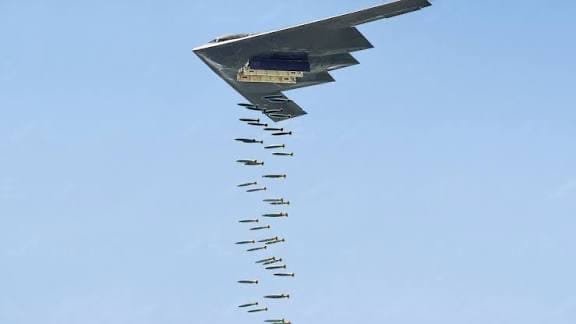
The book explored the various ways that "region" might be thought – external geopolitics or internal shared identity, common historical experience or contemporary connections – and the implications for both scholarship and policy. In the article version, I mentioned that the Gulf states increasingly viewed themselves more like East Asian city states and hubs of global capital than as part of the Middle East; the ravages of the American-Israeli war on Iran has brought back the realities of geography, but does not change that deep and broad structural reorientation. (Happy to send a free PDF if anyone is interested and doesn't already have one.)
So I was excited to see the new book West Asia, by Mohammed Soliman, which makes the case for placing the Middle East within a broader Indo-Pacific to Mediterranean context. Soliman joins me for this week's Middle East Political Science podcast. Listen here:
Soliman, an Egyptian-American engineer and long-time fellow at the Middle East Institute, places this recentering in the context of the global shift of power towards Asia. He sees the Middle East as increasingly networked and connected by shared interests and flows of capital, goods, and people to a vibrant Indo-Pacific region. His remapping of the Middle East and South Asia into West Asia resonates with the academic literature I describe, but has more pragmatic and strategic aims. He attempts to operationalize the theoretical and empirical observations of these transregional realities into a new American grand strategy connecting its Middle East policy with its Asian strategy in order to enable new alliances, new institutions, and new opportunities:
"As the region undergoes these fundamental transformations, the Middle East should be more accurately understood as West Asia, stretching from the Mediterranean Sea to the Indian Ocean. For the United Staes to successfully 'pivot to Asia,' Washington must understand these new boundaries."
Soliman's remapping of the region makes sense of the growing interventionism by the Gulf, Turkey, Iran and Egypt in the Horn of Africa and the 'Asianization' of the Middle East (or at least the Gulf) through ever expanding economic and political relations between Middle Eastern and Asian states (not just China). Policy ideas like the Abraham Accords and the Biden-era IMEC (India Middle East Corridor) fit well within this construct. So does the recent Saudi bid to form a regional alliance incorporating Turkey and Pakistan to balance against Israeli and UAE power, and Benjamin Netanyahu's public discussion of a "hexagon" alliance incorporating India along with other Asian and Mediterranean states. West Asia is an ambitious and creative book which takes seriously the strategic implications of transregional realities and the rise of Asia without succumbing to simplistic narratives of US-China competition. The focus on grand strategy and US interests may not appeal to the postcolonial scholars who have theorized SWANA from the perspective of the global south, but even they will have to reckon with what it might look like if Washington took seriously the structural changes in global politics that they (and I) have been theorizing.