Iraq's Shia Warriors
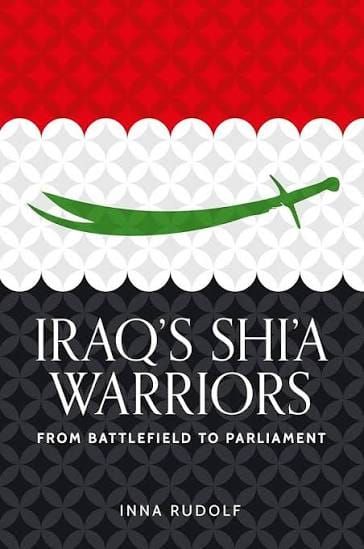
I'm delighted to announce the launch of the 16th season of the Middle East Political Science Podcast! We kick off this year with a conversation with Inna Rudolf about her new book Iraq's Shia Warriors: From Battlefield to Parliament. It's a timely and important book which delves deeply into the politics of the variety of Shi'a militias which have played such an outsized role in Iraq's trajectory, particularly the Popular Mobilization Units (Hashd) which emerged in 2014 in response to Ali Sistani's call to defend against the Islamic State. I'm especially delighted to kick of the new season with Rudolf's book because she has been a long-time participant in POMEPS junior scholar development activities including a small research grant for travel to Iraq, a book workshop, and a contribution to a journal special issue.
Rudolf shows just how diverse these various group are, tracing the different genealogies, interests, structures, and practices of groups that are too often lumped together as a homogenous entity. Based on outstanding field research and wide ranging interviews as well as ethnographic observation, the book dissects easy assumptions about these militias as only Iranian proxies, or only economically-motivated protection gangs. That diversity matters enormously as the US pressures the Iraqi Prime Minister to disarm them, a task which few believe to be possible.
Rudolf is especially good in theorizing the Iraqi state, building on work by Toby Dodge and others in conceptualizing the Shi'a militias within a highly penetrated and ambiguous state. Many PMU units were already integrated into the official Iraqi security forces, though most kept their separate identities within the ranks. Weberian conceptions of a monopoly on the means of violence hardly apply in this context, and she uses the empirical exploration of the militias to engage with a range of recent theorizing about the nature of the state in the Arab world (including an extended discussion of Making Sense of the Arab State, which I edited with Steven Heydemann). She also has fascinating insights into the importance of individual leaders within the militia landscape. Her research shows how different leaders understand their relationship with the state – most interestingly, a contention that they are not threats to but guardians of the Iraqi state against the corruption of politicians and external forces.
Listen here:
In addition...
Lessons in Repression is a major new report prepared by the Academic Freedom Initiative at the Middle East Studies Association. It is "the first systematic study of retaliation against workers on campuses in the US and Canada related to Palestine since October 7, 2023, revealing the devastating effects this repression has had on individual lives, campus discussion of Palestine, and academic freedom generally." It is strongly recommended for anyone who cares about issues related to Middle East Studies, academic freedom, campus crackdowns, and the future of higher education.
More next week!