A glorious reprieve
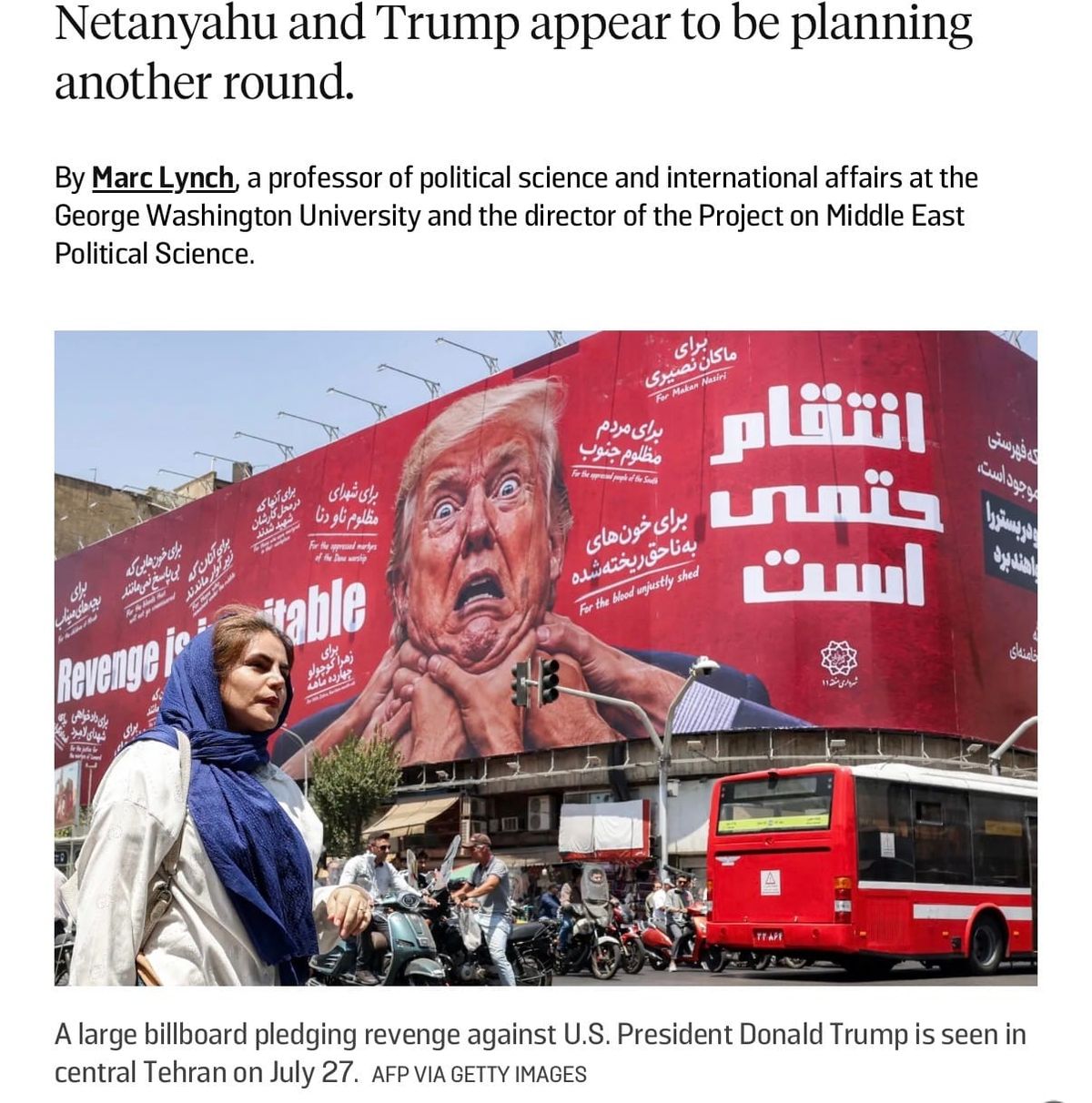
Last week, I wrote a piece for Foreign Policy warning of the devastating potential consequences (gift link) of Trump and Netanyahu launching another round of war with Iran, as had been widely reported. "The suggestion to launch a renewed, intense military campaign represents a tacit recognition of U.S. failure," I wrote at the time. And the siren's call of military escalation promised only ruin:
The Trump administration no doubt sees itself in an intractable situation from which it can still escalate to win. That is an illusion. Iran is once again perfectly capable of seeing the blow coming. It will not be taken by surprise and has already signaled its intentions to respond. The regime has strong grounds to believe that it (if not the Iranian people) will survive and prosper even under another round of intense military attack. The possible strike would simply accelerate the escalatory dynamics and reinforce emergent Arab convictions that the United States has become a destabilizing force and an unreliable partner that cannot be counted on to provide security or order. When the smoke once again clears, in Iran and in the countries that bore the costs of its retaliation, the renewed campaign may well prove to have been the final blow not to the Iranian regime but to U.S. leadership in the region.
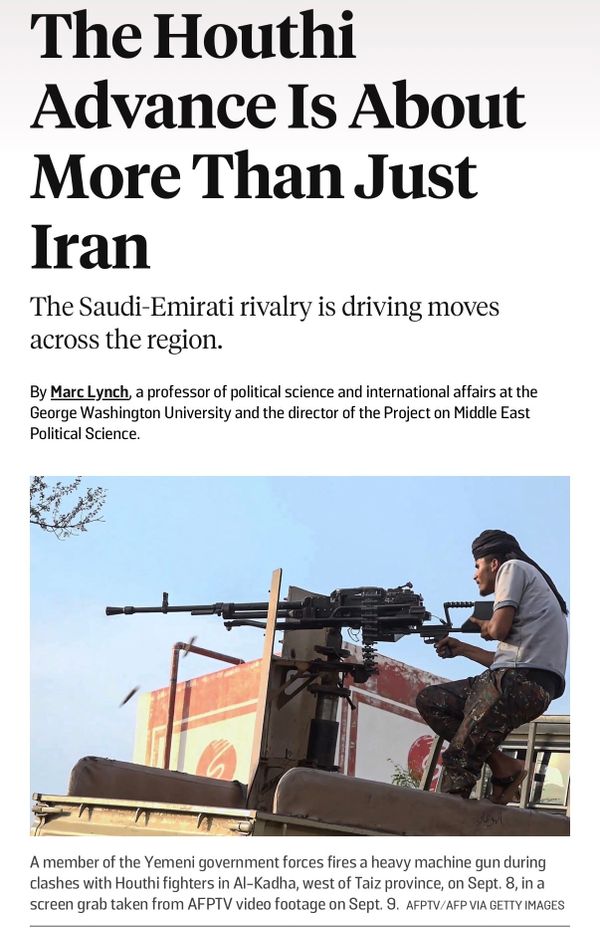
The overall dynamics laid out in the article remain fully entrenched. As I argued, "The United States is now locked in exactly the kind of protracted war scape in which decisive victory is close to impossible. Iran has long thrived in these environments. The U.S. blockade and episodic violence hurt Iran, to be sure, but the pain is not evenly distributed. It tends to reinforce rather than degrade regime control, strengthen the hand of hard-liners over any remaining moderates, and provide a ready-made excuse for collective suffering that might otherwise be blamed on the country’s leaders." And the Gulf states, caught in the crossfire and watching Yemen, wanted none of it.
Tuesday night's election delivered a stunning, unprecedented rejection of every facet of the Trump administration. I will have a longer piece out soon detailing how I think this matters for the US and the Middle East over the next two years. But for now, I'll just say that I think the US election results – along with the all-consuming Israeli post-election domestic political maneuvering – probably have significantly reduced the risk of another devastating American military assault on Iran. And that's not nothing.
Read my whole FP piece here (gift link).
**
There's a new episode of the Middle East Political Science podcast up today. I speak to Exeter's Geoffrey Hughes about his book, Social Media Tribes: Jordan’s Bedouin and the Margins of the State. It's really a fascinating book, which brings me all the way back to my origins in the study of the Jordanian public sphere. Hughes offers a compelling exploration of the operation of the media in Jordan, the shifting modes of tribalism, and the ways in which digital media have impacted already existing social, political and cultural dynamics. Listen here:
**
Finally, if you're in DC, please do come out tonight to see me and Negar Mortavazi talk about my book, the Iran war, and the elections at Busboys and Poets (14/V). I'm excited, and hope to see some of you there!