Middle East Studies is doing fine, thanks.
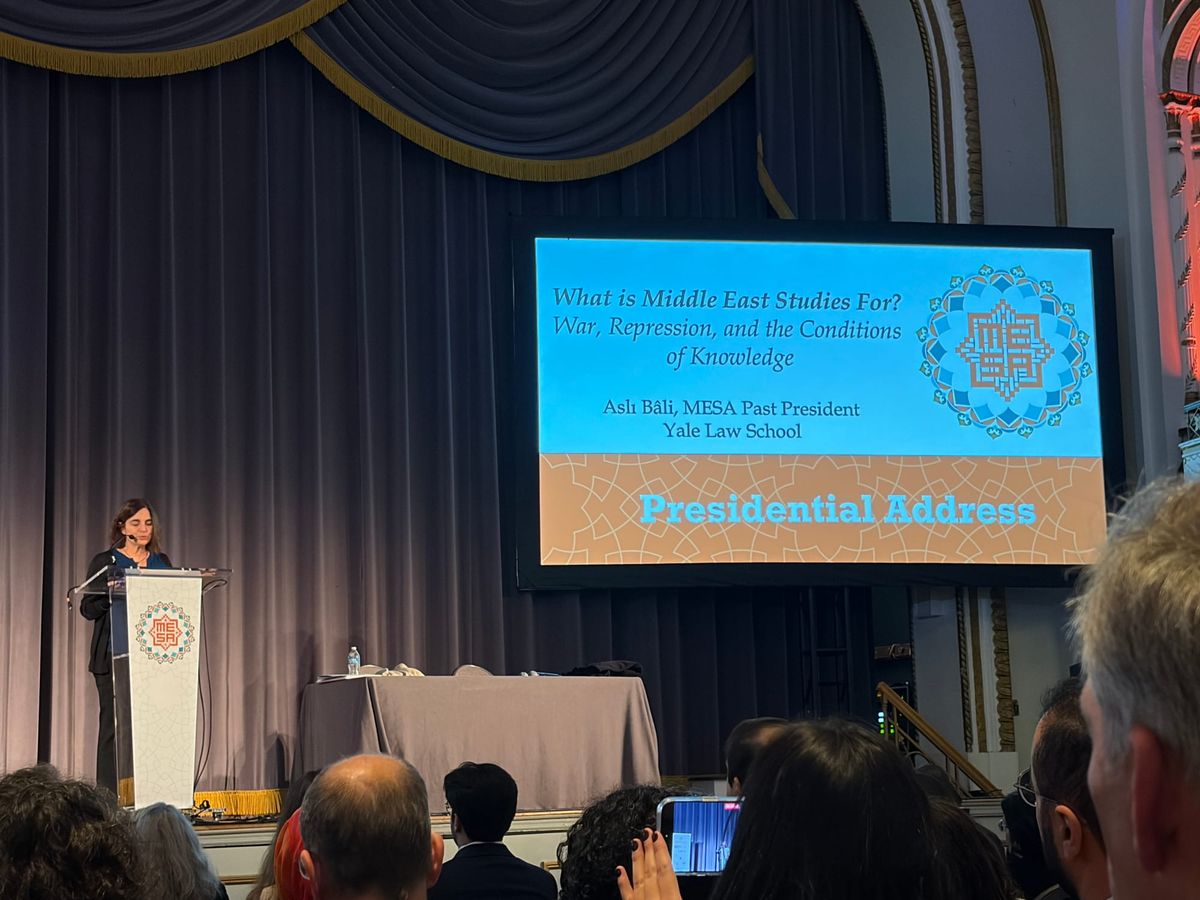
I've just returned from the 60th annual Middle East Studies Association conference in Boston. I spoke on three panels (including one on regional order based on a series of POMEPS workshops and another on the 20th anniversary of the Arab Barometer), and celebrated the careers of two titans of our field and wonderful people (Lisa Anderson and Zachary Lockman). I'll have more to say about those later. Much more important, though, was the almost unbelievable vibe shift in the organization. MESA is thriving despite all of the concerted campaigns against our field both before and after October 7, 2023, despite all the pain and suffering inflicted on its members, despite all the attempts to delegitimate the field and make it a pariah. And that didn't just happen. It required leadership, courage, and conviction.
On Monday night, Asli Bali's electrifying presidential address packed an enormous ballroom, with people practically hanging from the rafters, in a display I've never seen in all my decades of attending academic conferences. I've never seen MESA more energized, more focused, or more vibrant. Not too long ago, in the wake of the passage of a resolution supporting the boycott of Israeli academic institutions, there was rampant speculation – some fearful, much excitedly enthusiastic – that the backlash would kill the association and lead to the flight of its individual and institutional members. Another wave of such speculation followed amidst the insanely repressive backlash against campus Gaza protestors. The haters were wrong. Instead, the willingness of Bali, her successor Usama Makdissi, and the many volunteers filling out the key advocacy committees to fight back, to defend its members, to defend Palestinian lives and universal human rights, and to demand academic freedom and civil rights has imbued the organization with a new kind of legitimacy. MESA is still standing, and never going back again.
I've worked closely with Bali on a series of MESA task forces over the years, including the task force on civil liberties and the newly formed Committee on Middle East Studies in the Public Sphere (CMPS). She is an absolute force of nature, a brilliant intellect and a tireless worker in the service of the public good. She has been an incredibly consequential leader for MESA, the right person at the right time to meet an incredibly difficult moment. Where so many professional associations (we see you, APSA and ISA and AHA and so many more) chose to hunker down and ignore the demands of their members during the Biden administration's appalling attacks on campus protests over Gaza and the Trump administration's full-scale assault on higher education, Bali's MESA fought back – not only with the regular stream of letters by the Committee on Academic Freedom, not only with important reports on broader attacks on students and faculty for their constitutionally protected speech (I'm proud to have made some small contributions to some of them), not only by proudly defending the intellectual contributions of the field, but by spearheading a bold and successful lawsuit along with the AAUP against the deportations of students for their political speech. Her leadership has galvanized the membership and infused the organization with purpose.
Bali's address centered the devastation of Gaza, with a grim and deeply documented recounting of the systematic Israeli destruction of Palestinian higher education and other sites of cultural memory and knowledge production. It wove in the attacks on Iranian schools and educational institutions. Many, if not most, of the scholars in the audience knew at least some of the Palestinian or Iranian academics arrested or killed, were familiar with the university campuses bombed and destroyed. She reviewed the multi-pronged assault on Middle East Studies under both Biden and Trump which we all lived through, the arrests and deportation campaigns, the weaponization of Title VI and absurd allegations of antisemitism, the doxxing and social media smears designed to intimidate and silence scholars who would speak out, the shameful acquiescence – if not active complicity – of so many university administrations. She described how MESA had fought back, and she left us with a rousing call for a Middle East Studies that matters. I'm sure it will be published soon.
I spoke a bit about those issues as well, in a rather less well attended but still important special session on the challenges of teaching Middle East Studies in this era. The "hot" crisis has largely passed, as Gaza has disappeared from the headlines, the protests have faded, and the architect of the weaponized antisemitism lawsuits has resigned. But we've entered a period of what we might call slow violence. The pressure on Middle East Studies proceeds through seemingly normal bureaucratic and institutional processes – a retired Middle East faculty member not replaced, an Arabic language teacher's contract not renewed and then the program shut down for lack of courses or enrollments, a lecture series designed to focus only on non-Middle Eastern issues, hiring committees electing not to admit students or recruit faculty from the Middle East who will have difficult getting visas, Middle East centers shut down and new well-funded right-wing civics centers and Israel Studies centers taking root in their place. Scholars still self-censor, as do students and so many others. It's a different era but no less dangerous. We have a report on those issues coming out soon.
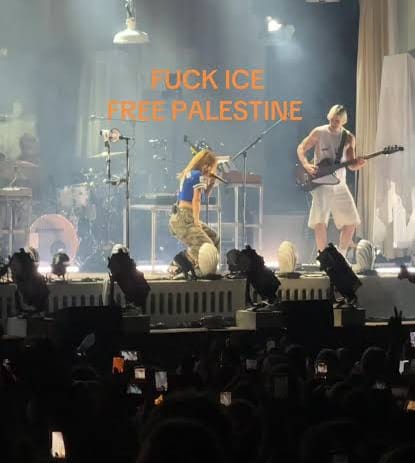
The positive thing, though, is that Middle East Studies no longer stands alone. Trump's wholesale assault on higher education has shown those who thought that he might be appeased by throwing Middle East Studies under the bus now realize that we are all in this together. Our early warnings that Middle East Studies was being used as a wedge for a broader assault now appear prophetic. It never stops with Middle East Studies, or with critical race studies, or with gender studies, or with transgender rights: the defense of one is the defense of all, and the defense of all demands the defense of one and all. This creates new potential for alliances and coalitions. You can see that emergent coalition in the AAUP's collaboration with MESA, you can see it in the public opinion survey showing dramatic shifts in views towards Israel virtually across the spectrum, you can see it in the midterm elections and the success of unapologetic candidates like Abdul el-Sayed, and you can see it in the ecstatic cheers at every Hayley Williams (of Paramore) show where she shouts "Fuck ICE, Free Palestine."