Corrupted by Power
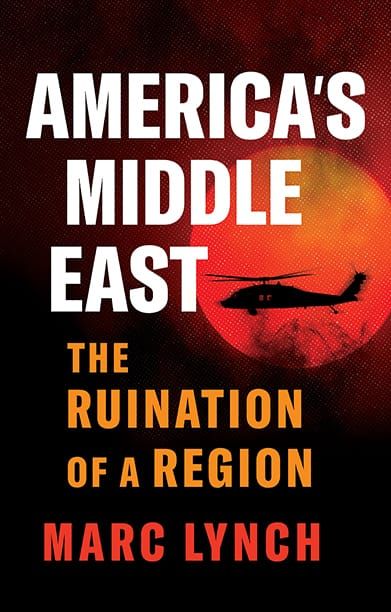
Earlier this week, Michael Young interviewed me for Diwan about my book America's Middle East: The Ruination of a Region. I was happy to answer his questions, in part because I spent several happy years as a non-resident senior fellow at Carnegie's Middle East program. But also because Young is a really interesting interlocutor, a veteran Lebanese journalist and intellectual with vast and deep knowledge of the region. In years long past, we often disagreed about things such as the Bush administration's freedom agenda, the democratic potential of the Cedar Revolution, and the place of Hezbollah. But over the course of many conversations in Beirut and online over the years, as well as his astute editing of multiple pieces I wrote for Carnegie, I've learned an incredible amount from him and really come to value our exchanges. So it meant a lot when he wrote calling America's Middle East "a really brilliant work—polemical enough to really rouse readers, but also very well documented and rich to support your arguments. I find myself in complete agreement with what you wrote." That means a lot.
You can find the whole interview here. Here I just want to excerpt a few passages that reflect things I've said in various book talks but I'm not sure I ever put to virtual paper before. First, here's the nub of the book project as a whole:
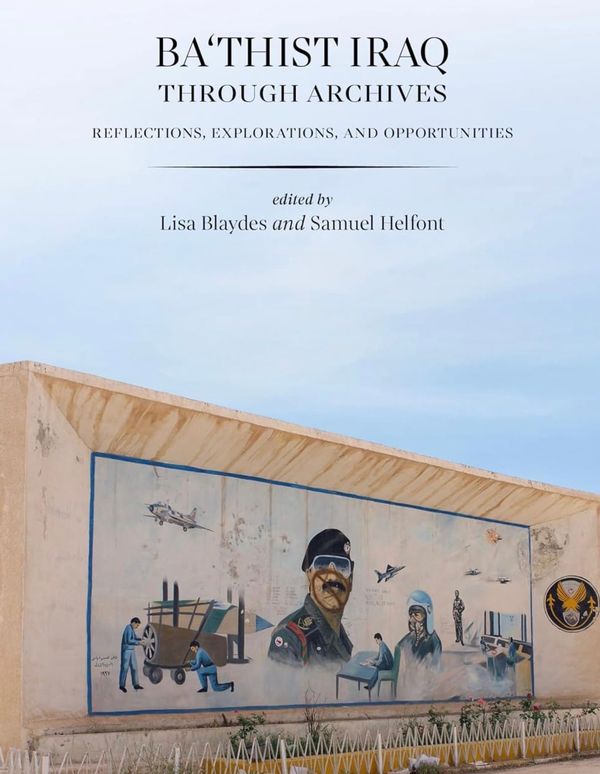
In some ways it would be easy if Gaza were an exception, something horrible but ultimately different from any other issue. But it’s not. I began my career working not on Israel-Palestine issues, but on Iraq, and specifically on the sanctions. And I remember feeling that same sense of outrage at the ease with which U.S. officials and think tankers dismissed the reality or the significance of the suffering they were imposing on the Iraqi people while claiming to champion them. I came to see a straight line from the indifference to the humanity of Iraqis in the 1990s to the absolutely horrifying support for Israel in Gaza. So, I sat down to write a book that would assess the entire period of American primacy in the Middle East—the period after 1990 when it experienced unchallenged domination with no real peer competitors. What did we do with our power? And the reality is that U.S. policy largely succeeded during that period in achieving the core objectives the United States had defined for itself: keeping Israel secure, keeping the oil flowing, and preventing any internal or external adversary from disrupting the system from which it benefited. But this came at the expense of virtually everybody who lived in the region, whose lives for the most part became infinitely worse under this American order.
Young asked me about why American primacy has been so bad for the region. I gave a long answer about structure and agency, and American preference for autocracy over democracy, and the role of lobbies in enforcing policy orthodoxy, and all that. Here I wanted to just excerpt the opening:
Part of it is simply that primacy is generally bad. You remember Lord Acton’s saying, to the effect that power corrupts and absolute power corrupts absolutely? I think that applies in the Middle East—to the United States and Israel alike. They are accustomed to acting with impunity, standing outside the rules and demanding that their self-interest take priority over anything else. And what that means is that even if Palestinian, Syrian, Iraqi, or Lebanese suffering is sad, it’s not important enough to them to warrant changing policies. It really only matters if it can be weaponized to justify action against an adversary; if our friends do it, we look the other way. And in the absence of real external costs or peer competitors forcing policy change, our policy tends to be locked in place in ways that are not responsive to what’s happening on the ground.
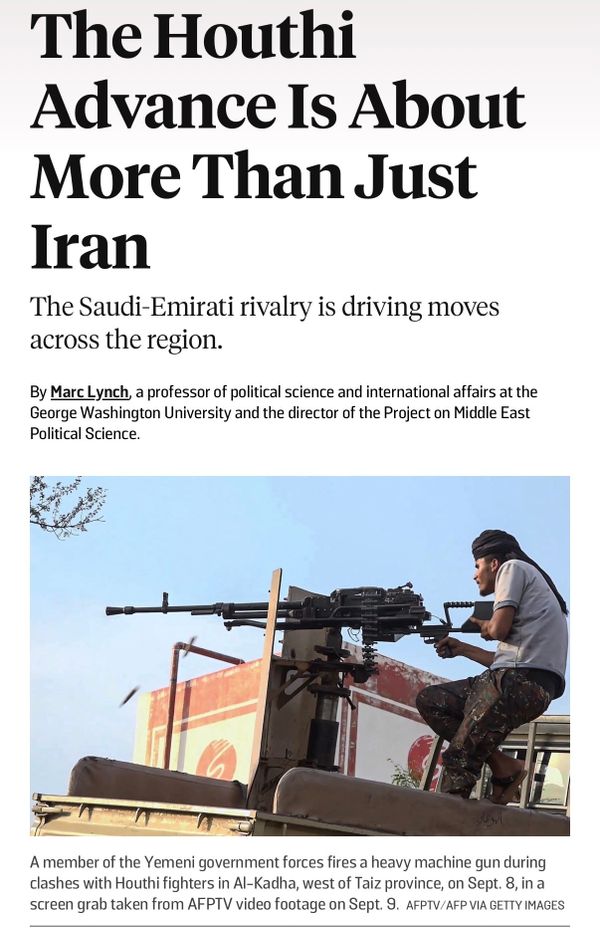
I go into some detail about what I mean by structure, concluding that "regional actors are often truer custodians of America’s Middle East than whoever occupies the White House—they benefit from the system as it is, and they work to keep it that way." There's a lot more in the conversation about Israel's overreach, the Saudi-UAE conflict, the undeniable racism that underpins America's approach to the Middle East (WEB Dubois, I write in the book, was right that the global color line is the central feature of world politcs), and more. Please read the whole thing. But here, instead of my usual Talking Heads references (though we are definitely on a road to nowhere run by psycho killers), let me call on Phoebe Bridgers: I Know the End.
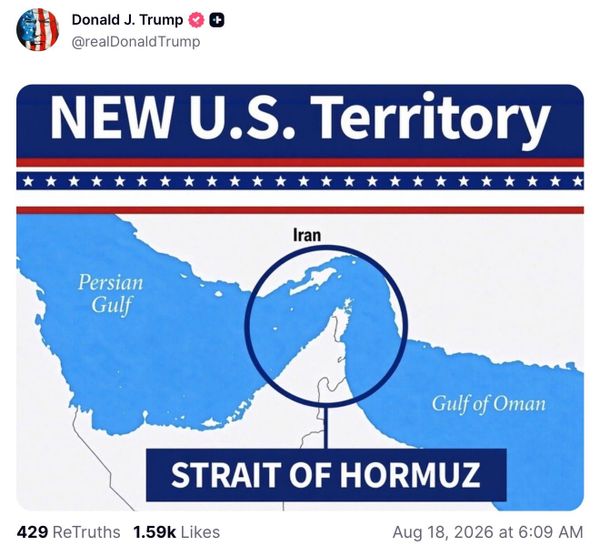
My book concludes, in line with Edward Said’s long-ago observation, that every empire thinks that it’s different. In Washington, we can’t imagine a Middle East that isn’t American any more than the British or French could envision an end to their domains. But those empires ended, and America’s will too. And when it does, it will pass alone, unmourned and unloved. I thought Gaza would be our Suez moment, but now Iran and the closing of the Strait of Hormuz will likely be what history remembers. We are seeing this unfolding right now, as Iran has systematically destroyed most of the U.S. basing architecture in the Gulf and exposed the limits of American power in genuinely transformational ways. A transition to a post-American Middle East is going to be messy and violent, as we are seeing, but it’s inevitable.
In many ways, this war is the apotheosis of America’s Middle East as defined in the book—an open military alliance between the Gulf states and Israel under American leadership against Iran; the mindless resort to extreme violence and indifference to the suffering inflicted on people supposedly being rescued; the preference for attacking from the air without putting troops on the ground; the inability to imagine how Iranians would respond and hit back. And, yes, it’s been an absolute disaster.
I think we are seeing a real unwinding of the core logic underpinning America’s Middle East, both the domestic consensus and the regional order. The Gulf states, especially, have seen themselves become targets because of a war about which they weren’t consulted. U.S. bases didn’t provide security, they invited attack. For now, these countries are mostly huddling even closer under the American security umbrella, but I think we should expect a fundamental rethinking on their part as things settle down. The debates about this already going on in Arab media outlets and online are fascinating, and, in time-honored fashion, are mostly being ignored in Washington.
Thanks to Michael Young and Diwan for the invitation, and I hope you all read the interview and then buy the damn book!