This Must Be The Podcast: Hossam el-Hamalawy
The Middle East Political Science Podcast returns this week after a short break with a fascinating conversation with Hossam el-Hamalawy about his new book Counterrevolution in Egypt: Sisi's New Republic (Verso 2026). It was a real pleasure to reconnect with Hamalawy, who I last saw in Cairo in 2011 in the heat of the Egyptian revolution. Hamalawy should be well known to anyone who follows Egyptian politics. He was one of the pioneering Arab bloggers, a photojournalist and Left activist who was on the front lines of anti-Mubarak protest from the start. His blog 3arabawy (along with his Twitter feed and other social media) documented protests and activism not only in Egypt but across the Arab world (you can see archives dating back to 2006 here, full of stunning photos as well as his real time analysis). He currently maintains a Substack blog featuring unique close analysis current Egyptian politics and fascinating historical deep dives into Egyptian military history (subscribe here, it's worth it).
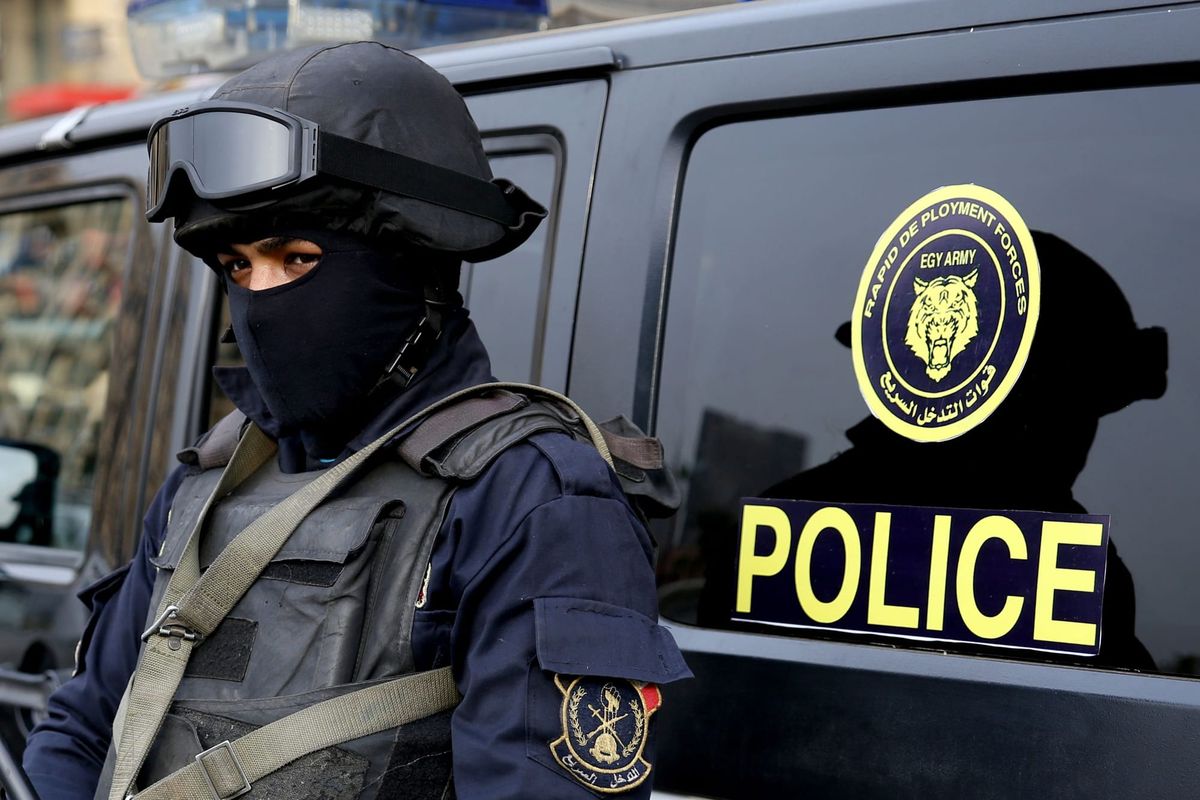
Counterrevolution in Egypt is based in part on Hamalawy's doctoral dissertation, fully expanded and updated into the best available analysis of the role of the security services in the Egyptian political system. It's really three books in one: a finely grained, detailed historical analysis of the evolution of the various Egyptian security services, carefully and meticulously showing the role of each in the institutional landscape of repression under different presidents; a spirited retelling of the Egyptian revolution and transition to coup, settling scores along the way; and a grim description of the 'perfect military camp' that Sisi has created since 2013.
Listen to my conversation with Hossam about his book here:
Hamalawy shows through meticulous research in a wide range of mostly Arabic language sources (as well as leaked American documents and other sources) how the role of the security services changed over the decades since the 1952 Egyptian revolution. He tells a story not of straightforward military domination but rather of competition among different security agencies – the different branches of the military, the police, the various intelligence services – and their changing role under each post-Nasser president. Nasser, like all Arab leaders of the 1950s and 1960s, was far more concerned about a military coup than about either external invasion or popular uprisings. His security institutions were designed accordingly, with brutal repression against political adversaries such as the Muslim Brotherhood but more limited deployment of force against ordinary Egyptians.
That changed under Sadat: "lacking charisma, hegemonic political ideology, totalitarian structures of control, and populist polices.... Sadat [instead] employed torture against ordinary citizens." Hamalawy traces how torture and overwhelming public security presence – maintained through the dramatic overuse of conscription – expanded under Mubarak. Torture and abusive police became the routinized public face of government for ordinary Egyptians. At the same time, as the Mubarak years ground on a new generation of Egyptian military officers rose to prominence who had never fought in a war and whose entire professional life was built around protecting their institutional class interests and economic perogatives.
Hamalawy's account of the Egyptian revolution will be a scintillating read for afficiandos of the genre. He mostly keeps the analytical lens on the role of the security services, though of course he can't help sharing his personal experiences as an activist at the center of revolutionary events (you'll be glad he does). He takes on Hazem Kandil's influential book on the military's role in the revolution, and more broadly pushes back hard on the popular ideas that the military had fomented the revolution to prevent Gamal Mubarak's succession, that it had planned the coup from the beginning, or that it was generally in control of events. He documents the in-fighting among the security agencies throughout the revolution, and shows how Sisi built his relationshiop with the doomed Mohammed el-Morsi in part to facilitate the generational transfer of military leadership. One comes away convinced by Hamalawy's arguments about what did not happen, but still not fully confident about why Sisi ultimately pulled the trigger and carried out the coup.
That uncertainty does not carry over into the grim third act of the book, which demonstrates how Sisi consolidated power into a Second Egyptian Republic which looked nothing like the previous order. Hamalawy argues that it is a mistake to cast Sisi's new order as a counterrevolution, since that implies a return to the old regime. Instead, Sisi fundamentally changed the system by inserting the military into every domain of Egyptian life – not just the economy, as has been widely documented, but also colonizing and crushing independent civil society, the media and culture, and the urban landscape. Sisi and his cohort believed that the Mubarak era had brought on revolution through tolerance for free media and managed but contentious civil activism; that would not be allowed to repeat. Hamalawy memorably describes the new Egypt as a "perfect Foucauldian military camp", with all that it entails.
Counterrevolution in Egypt is a major contribution to our understanding of Egypt over the last half century, and should be widely read by historians, political scientists, and regional specialists alike. For more on Egypt from the revolution to Sisi, check out earlier podcasts and books I summarized in my post last year about "Egypt's dozen uselessly brutal years" including: Maged Mandour's 2024 book Egypt Under Sisi describes "a militarized, repressive, mobilized and brittle regime." Mona el-Ghobashy's 2022 Bread and Freedom is one of the very best accounts to date of the 2011 revolution and its highly contingent path. Jannis Julien Grimm's Contested Legacies focuses directly on the Rabaa massacre and the politics of its aftermath and its legacy (I wrote about Ghobashy and Grimm together in this review essay.) Neil Ketchley’s Egypt in a Time of Revolution and Amy Austin Holmes’s Coups and Revolutions both look at the drivers and the aftermath of 2013. Walter Armbrust's Martyrs and Tricksters offers a novel account of Sisi's political role and the defeat of Egypt's revolution. Nathan Brown, Shimaa Hatab and Amr al-Adly's Lumbering State, Restless Society situates Sisi within a much longer trajectory of Egyptian political history. Atef Shahat Said's Revolution Squared focuses on the "lived contingencies" of Egypt's revolutionaries through the 2011 and 2013 uprisings and beyond. Hesham Sallam had a nice overview of Sisi's first decade. And finally, Yezid Sayigh's "Egypt's Second Republic" mercilessly dissects the political economy of "a new republic defined by a social ethos of “nothing for free,” a new form of state capitalism, and hyperpresidential powers set within a military guardianship that secures his regime but leaves it unable to resolve political, economic, and social challenges"; also more recent podcoasts with Killian Clarke on counterrevolutions and Stephane Lacroix on the salafi movement and its complex ties to the military.