This Must Be The Podcast: Jason Brownlee
Plus two great new reviews of America's Middle East
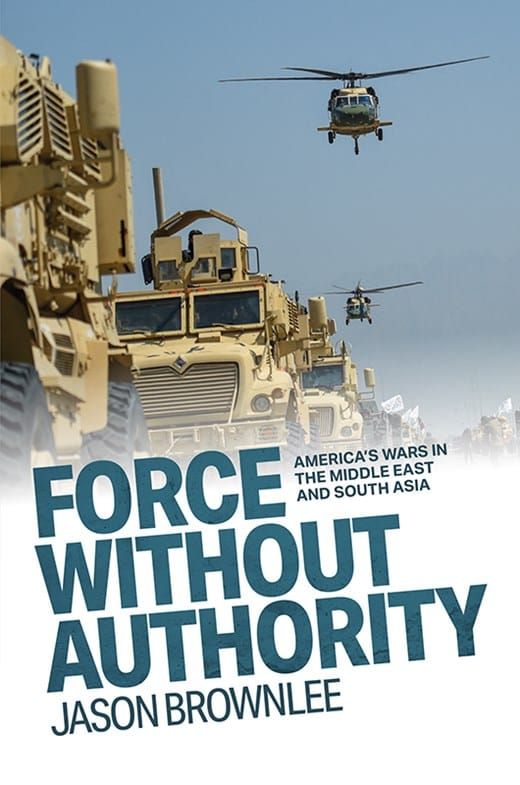
Jason Brownlee joins me on this week's podcast episode to talk about his new book Force Without Authority (Oxford University Press, 2026). Brownlee is well known in the Middle East political science community for his work on authoritarianism, especially in Egypt, especially for his influential co-authored book The Arab Spring which presented a skeptical reading of the impact of the uprisings, especially on states that enjoyed hereditary monarchs and/or oil wealth. The role of international factors on domestic outcomes has been a consistent theme in his work. In Authoritarianism in the Age of Democratization, Brownlee sought to explain why certain authoritarian regimes proved more effective in resisting global trends towards democratization; in Democracy Prevention, he zeroes in on the United States as the key actor allowing Hosni Mubarak's Egypt to endlessly defer democratization. This move by comparativists to better incorporate regional and international dimensions is very healthy; as I argued a decade ago, "This comparative politics approach to the uprisings has always been problematic, though. The Arab uprisings began in transnational diffusion and ended in transnational repression and regional proxy wars. Put simply, there is not a single case in the Arab uprisings... in which international factors were not decisive to the outcome."
In Force Without Authority, Brownlee turns to broader questions of US foreign policy and international relations. He seeks to understand why the US since 1991 has so often failed to translate its overwhelming military dominance into the ostensibly desired political outcomes. He relies on a distinction between force and authority which will be familiar to students of power (in my book, for instance, I distinguish between primacy and hegemony based on whether power is grounded in normative consent and shared purpose). Brownlee reviews a wide range of interventions and non-interventions from West Asia through North Africa (pointedly including Afghanistan, especially, in his account of the region's wars), finding a consistent pattern of failure at the point of transition from force to authority. He is interested less in the vagaries of particular presidents or administrations than in the broader structural explanations for enduring patterns.
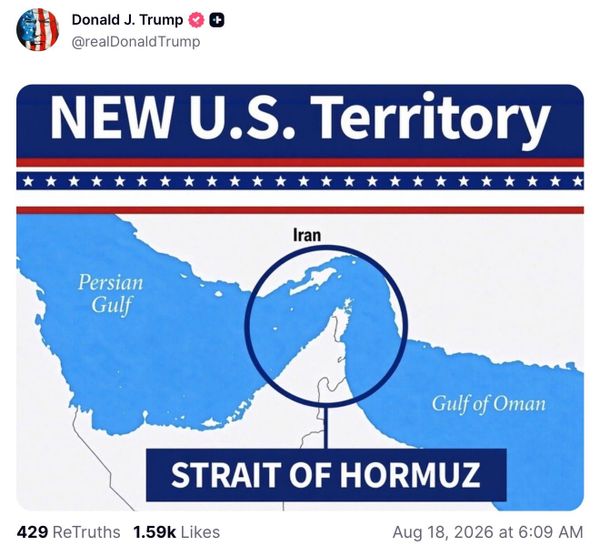
One key mechanism he unpacks is how risk aversion tends to not just constrain American action, except for the brief window after 9/11 when the Bush administration went wild (to everyone's detriment), but also reinforces the failure to generate authority. The US tends to intervene against weak adversaries which are unable to retaliate, preferably from the air and without boots on the ground – the perfect environment to incubate failure in the search for authority. Where it has intervened in an attempt to impose authority through force - primarily Afghanistan and Iraq – it failed spectacularly. While it's outside the bounds of his book, Brownlee suggests in the podcast that the same logic even applies in the current Iran war – from the one bombing sortee in the twelve day war to the vast devastation caused by 37 days of bombing beginning on February 28, Trump has resisted calls to introduce ground forces and has backed down each time Iran has imposed significant consequences (i.e. the targeting of Qatar's natural gas fields).
Listen to my conversation with Jason Brownlee on this week's Middle East Political Science Podcast:
Two excellent new reviews of America's Middle East: The Ruination of a Region appeared this week. First, Hossam el Hamalawy writes for Middle East Eye that "The anger that animates these pages is not the ornamental fury of the columnist or the safely retrospective indignation of the memoirist. It is the rage of someone who has lived inside the institutions through which American Middle East policy is made, and who has finally concluded that the machine did not merely malfunction. It worked as designed... The result is not hypocrisy as an occasional lapse, but hypocrisy as infrastructure. " He reviews my argument, brilliantly and incisively: "The title is therefore exact. America’s Middle East is not the Middle East as lived by its peoples, nor the Middle East of its poets, prisoners, workers, exiles, mothers, revolutionaries and martyrs. It is a geopolitical construction, a map drawn by power and defended by euphemism. Lynch’s achievement is to show how that map became so durable, and why even its failures have rarely discredited it inside Washington." He then summarizes one key theme better than I did:
"Washington did not invent every despot, militia or war. It did, however, build the weather in which they learned to move. It rewarded brutality, sanctioned others, excused allies, demonised enemies, disciplined knowledge and then called the resulting wasteland order."
A second review appears in the journal Middle East Policy, by Yasir Kuoti, an Iraqi graduate student at Boston University, who calls it "one of the most comprehensive accounts of US regional hegemony." Like Hamalawy, Kuoti highlights how the book conceives of the structural effects of US primacy which "not only continues to shape the identities and interests of regional actors—conditioning how they understand security, legitimacy, and survival – but also encodes a profound moral hierarchy: the systematic devaluation of Arab and Muslim lives relative to others." Scholars writing from the region have far fewer hesitations about highlighting and celebrating this aspect my book than do others, I've noticed. Hamalawy and Kuoti also bring out my argument about the role that the local regimes play in sustaining America's Middle East, to the detriment of so many of the region's people.
I'm deeply grateful for the kind and thoughtful engagement from Hamalawy, who is himself of course on of the region's most well-known activists and now scholars (I had him on the podcast a few weeks back to talk about his book on Sisi's Egypt); Kuoti, a young Iraqi scholar; and the veteran Lebanese writer Michael Young last week. The book was written in part for them – for the brilliant scholars, activists, and thinkers from the region who I've always tried to center in my own analysis.
The book was also written for the classroom, so let me repeat here something I offered on social media last week: if you assign my book to your class, I will do my absolute best to join a class session in person (if possible) or over Zoom to talk about it. Let me know if you're interested and let's set something up!