Weak States in a Turbulent Middle East
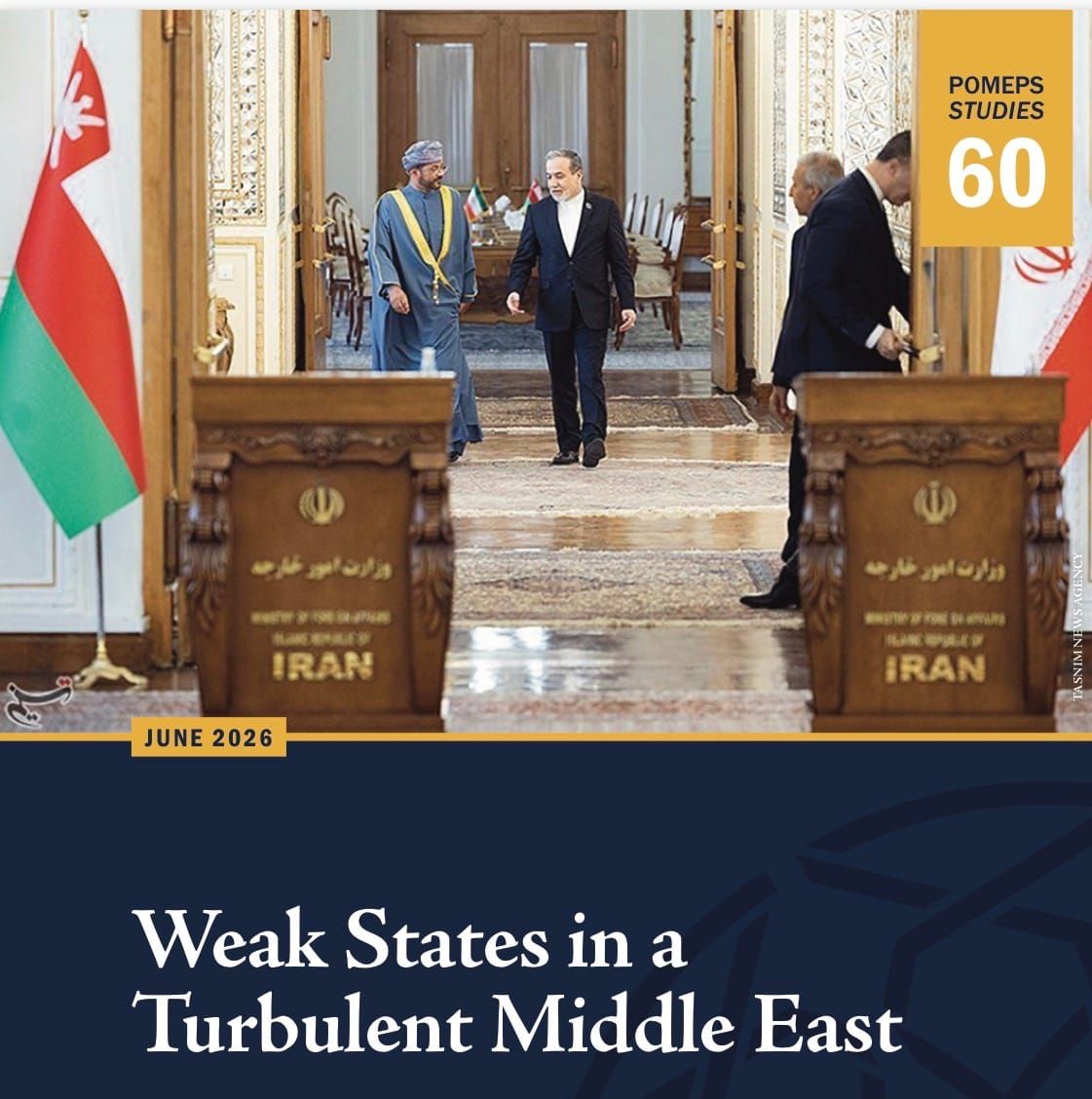
I'm pleased to announce the publication of POMEPS Studies 60 Weak States in a Turbulent Middle East. It's based on a workshop I ran with Waleed Hazbun at the University of Alabama a few months ago, and builds on the series of regional international relations projects we've been doing at POMEPS the last couple of years. You can read the whole collection for free here. Below, I reproduce the framing essay which I wrote with Waleed Hazbun in its entirety.
Strategies of the Weak: Navigating Regional Turbulence, the Iran War, and the Decline of US Primacy
Waleed Hazbun and Marc Lynch
To many it is a supposed truism of Realist international realism theory, built on a misunderstanding of Thucydides’ History of the Peloponnesian War, that “the strong do what they can and the weak suffer what they must.” Many self-styled Realists have taken this dictum as a guide to action. They place powerful states at the center of their understanding of global politics and relegate the small and weak state to the role of passively accepting their fate in an international system defined by great powers. They dismiss appeals to morality, international law or justice and revel in domination through brute force. The actual lesson of Athenian brutality in the Melian Dialogue, of course, was that by abandoning morality the city state had doomed itself to defeat.[1] Yes, the Melians were massacred and their fields salted and their women and children enslaved, but the story of their fate spread far and wide and soon cost Athens not only its reputation but its alliances and, ultimately, the war.
It may well be the case that we are witnessing the United States and Israel repeating the Athenian tragedy. The Trump administration flaunts its embrace of this notion as the basis for their “peace through strength” vision for global order based on spheres of influence. Israel, backed by the United States, has relentlessly expanded its zone of military operations since October 7, 2023, attacking Lebanon, Syria, Yemen, Iran, and even Qatar.[2] Their unprovoked war against Iran in late February 2026 was built on the hubristic expectation that the unprecedented, devastating assault would lead to regime collapse or a humiliating Iranian surrender. The sheer volume of bombs and missiles dropped on not only military targets but also on civilian sites, state institutional sites, desalination plants, and energy infrastructure, along with the assassination of a wide swathe of the Iranian leadership, was meant to demonstrate overwhelming American and Israeli dominance and to finally resolve the long regional conflict with Tehran rather than manage it.
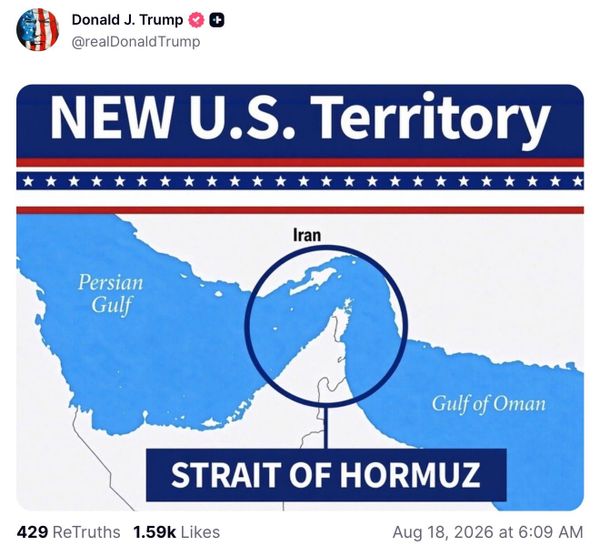
Instead, Iran’s regime survived the onslaught and effectively retaliated by targeting American military bases across the Gulf, sustaining missile strikes against Israel and the Gulf states, and closing the Strait of Hormuz. Months after the supposedly decisive military strike, the US seems to have decisively lost the war despite the horrific devastation and death it inflicted, with neither a diplomatic nor a military path to the reopening of the Straits or a nuclear agreement. Global and regional horror at the brutality of the war, along with the demonstration of the impotence of the full weight of the American arsenal, has triggered unprecedented fissures in America’s core alliances — much as Israel’s devastation of Gaza dramatically damaged its standing with many of its allies (with the noted exception of the United States). Together Israel and the United States seem to be replaying the Melian Dialogue at the regional and global levels with the actual consequences Thucydides had observed.
If the Iran war serves as a cautionary tale of hubris and defeat for the mighty, how does the story play out for the weak? America’s allies around the region bore the brunt of Iran’s military retaliation and economic warfare and struggled to adapt to dangerous new realities. Not all weak states respond to their dilemma in the same way. Some seek neutrality, others hope to find security through subordination to a powerful state (or bandwagoning as alliance theory calls it), while some embrace isolation and resistance. Yet others become internally divided and fragment due to competing external interventions. The choices of such small states may not be of great interest to Realists fixated on the great powers, but as the fierce competition for allies during the Cold War demonstrated in many ways it is their choices which ultimately shape the nature and stability of global order. Not all small states are the same, not all weak state are as weak as they appear, and all have considerably more agency than one might expect.
The dilemmas of the weak have become more intense as the institutions of international order have broken down. The international liberal (or, in Biden’s terms, “rules based”) international order established after 1945 was meant to offer at least some protections to small states. International law, as codified in the United Nations Charter, was built around the delegitimization of seizing territory by force (a norm enforced by the US when Iraq invaded Kuwait but ignored when Israel occupied Palestine and Lebanon), while human rights norms and the Geneva Conventions established limitations on how violence could be used during conflicts. But those international restraints have become eroded since the US invasion of Iraq in 2003, and more recently, thoroughly shredded by the Russian occupation of Ukraine, Israel’s destruction of Gaza, the US intervention in Venezuela, and the repeated the US and Israeli attacks on Iran.[3] In a world where the strong do what they wish and make the weak suffer “what they must,” how do the weak survive? How might they adapt? What new threats and opportunities are emerging?
To address these questions in the context of the current US and Israeli wars on Iran (and Lebanon) and during what appears to be the eclipse of US primacy, we brought together a group of scholars with expertise on the “weak” states of the Middle East for a Project on Middle East Political Science workshop at the University of Alabama in March 2026. By weak states we are not invoking (the often problematic) theories of “fragile” states.[4] Several of the essays in this collection explore these definitional issues and problematize casual assumptions about the dependence and subordination of the “weak.” But for the most part we are simply playing off the notion of in Realist theory that “small states” are those with limited capacity to project power and shape the regional system while remaining vulnerable to those states that can. We did not address the powerful states such as Qatar and the UAE that have been able to use their power, wealth, and leverage to influence the dynamics of the regional Middle East system — though the intensive Iranian targeting of the UAE during the war, and Qatar’s vulnerability to the blockade of the Straits of Hormuz, demonstrate that even “strong” regional powers face serious threats that are not easily met.[5] But for this collection, we focused on the relatively weaker and more vulnerable states such as Jordan, Oman and Kuwait as well as the state, para-state, and non-state actors within divided and not fully consolidated states such as Lebanon, Syria, and Yemen. We explore the experiences of the smaller and weaker Middle East states in a rapidly changing regional order that is likely to experience more instability and violence.
The current dilemma of weak states is framed nicely by Sean Yom, who observes that American primacy has shifted from predictability and security provision to a more predatory and destabilizing form of domination. President Trump’s second term has subverted the strategy of the region’s weak and vulnerable states where, even for regional actors who had long sought to conform to the needs of regional US interests, they find the terms of their bargains are shifting. These shifts have particularly dire implications. What are such states to do when their chosen protector becomes indifferent to their fate, exposes them to existential threat, or even becomes a predator? Pete Moore addresses the seemingly ironic security implications for Arab states hosting US military bases. While closely integrating themselves into the regional system of US intelligence, surveillance and power projection, the hosting of these installations on their soil have put them in the trajectory of missile fire and drones from Iran targeting Israel and those US bases. Moore observes they find themselves more threatened than at any period in their modern history.
Courtney Freer focuses on the diplomatic aspects of Kuwait’s “hedging” strategy that sought to avoid conflict with Iran and resist normalization with Israel while helping to mediate rifts that have emerged among the more powerful Gulf Arab member states. She explores how the recent US effort to seek greater regional integration with Israel and the US-Israeli war on Iran has put strains on Kuwait’s regional positioning. Curtis Ryan notes how Jordan lost influence with the United States even though it has done everything (and more) one might ask of a client state. He notes how the war against Iran as well as the one against Gaza and the troubling situation in the West Bank bring pressure on the kingdom from all directions, though with little seeming concern from Washington. Other weak states in the region made different choices: Oman, as Tyler Parker demonstrates, opted for neutrality and a mediator’s role rather than subordination to the United States or to Iran. This position enabled Oman to play a key role as a mediator across the region’s divisions and gaining appreciation from all for doing so. Their stance, however, has become more difficult as order has broken down with Oman itself impacted by the war and their value as a mediator degraded.
Meanwhile, Samer Abboud, Stacey Philbrick Yadav, and Kelly Stedem, explore the dilemma of weak states from the inside-out with a focus on Syria, Yemen, and Lebanon—states associated with the Iran-aligned “Axis of Resistance.” The recent Israeli and US wars have inflicted considerable damage to all three, without dealing decisive blows to any but trying to keep them internally fractured and weak.[6] These studies indirectly build from the insight of critical security studies that notions of security need to be disaggregated as states often fail to provide security for their whole societies while different domestic communities might have rival approaches to guarding their own security. They also highlight how various sub-state actors face their own security dilemmas but also have their own agency to address them in different ways.
Samer Abboud explores the politics of security in Syria in the aftermath of the fall of the Assad regime defined by competing visions between a centralized or decentralized Syria. Under the leadership of President Ahmed al-Sharaa, who had led the rebel movement Hay’at Tahrir al-Sham, the Syrian regime is attempting to consolidate and centralize power. Abboud explores how al-Sharaa, seeking to navigate this challenge within a destabilizing regional environment, must confront Syria’s new security entrepreneurs, such as those leading the Druze National Guard and Syrian Democratic Forces, who sustain a communitarian security logic often with support from external powers. He shows how regional powers such as Israel, Turkey, and the UAE can take advantage of internal fissures in their pursuit for strategic advantage — and how internal actors can in turn take advantage of their interventions.
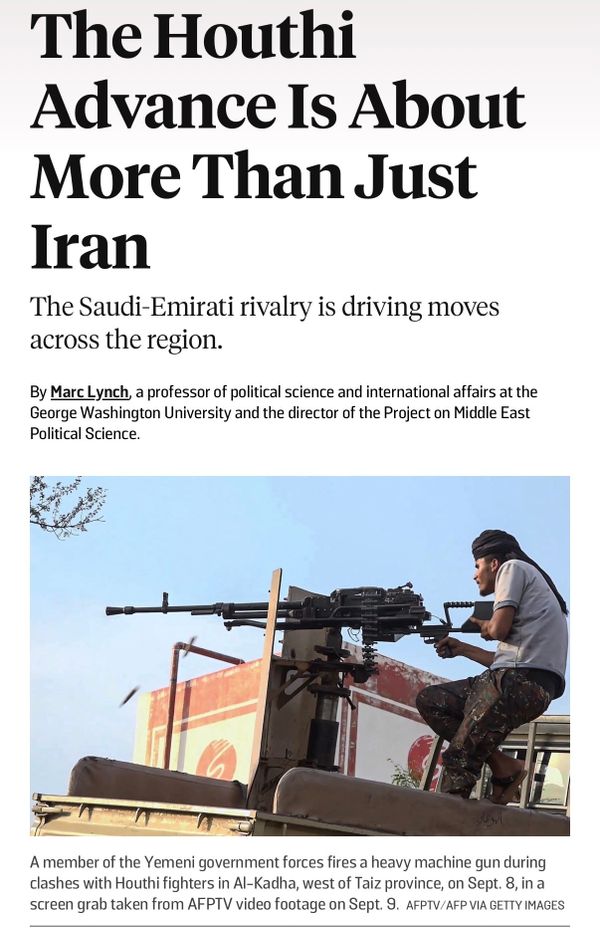
Stacey Philbrick Yadav explores related questions in the case of Yemen with a focus on the everyday provision of education. In contrast to the rival centralizing vs decentralizing forces in Syria, Yemen remains fragmented between rival regional governance systems. Yadav shows how different forms of bureaucratic entrenchment are developing within the educational systems in different regions of Yemen, highlighting one of the lasting legacies in Yemen of the regional rivalry between Saudi Arabia and Iran while noting the multiplicity of actors and motives that defined these legacies in each context. She argues for appreciating the Houthis as a Yemeni actor, showing the limits of viewing it as simply an Iranian proxy without minimizing their ability to leverage Iranian support for domestic purposes.
Kelly Stedem addresses the complex and volatile case of Lebanon while still under occupation and daily assault from Israel. She explores the limits of the US-backed narrative that Lebanon’s key challenge can be defined by the question of the disarming and disempowering of the militant group Hizbullah. Noting the group’s ability to maintain its military capacity and functioning, she argues the critical question is that many Shia from the South and elsewhere in Lebanon have little political, economic, or even security alternatives to Hizbullah. The group, she argues, has endured by maintaining internal strength thanks to its continued provision of clientelistic goods to this community. Dismantling Hizbullah may begin with disarmament and the Lebanese state holding a monopoly on weapons in the South, she argues, but the state will also need to address the key reasons that so many Southern Shia have remained steadfast in their support of the organization.
Taken together, these essays show both the severity of the challenges confronting the weak states of the Middle East amidst regional turbulence and American decline, and the agency of those states (and non-state actors) in devising strategies to respond. Even the weakest of actors seek out the means to preserve their vital interests and advance their goals, often frustrating the expectations and ambitions of the powerful.
Weak States in a Turbulent Middle East is part of an ongoing series of POMEPS workshops and publications focused on the international relations of the Middle East:
POMEPS Studies 16: International Relations Theory and a Changing Middle East (2016) (with Morten Valbjørn)
POMEPS Studies 34: Shifting Global Politics and the Middle East (2019) (with Amaney Jamal)
POMEPS Studies 54: Debating US Primacy in the Middle East (2025)
POMEPS Studies 56 Regional Order Making After October 7 (2025) (with Simon Mabon and Raffaella Del Sarto)
POMEPS Studies 58: IR Theory and the Middle East at War (2026) (with Morten Valbjørn)